
Blog
Commercial Refrigeration: R-404A, R-448A and R-449A Explained

Last updated: August 20, 2026
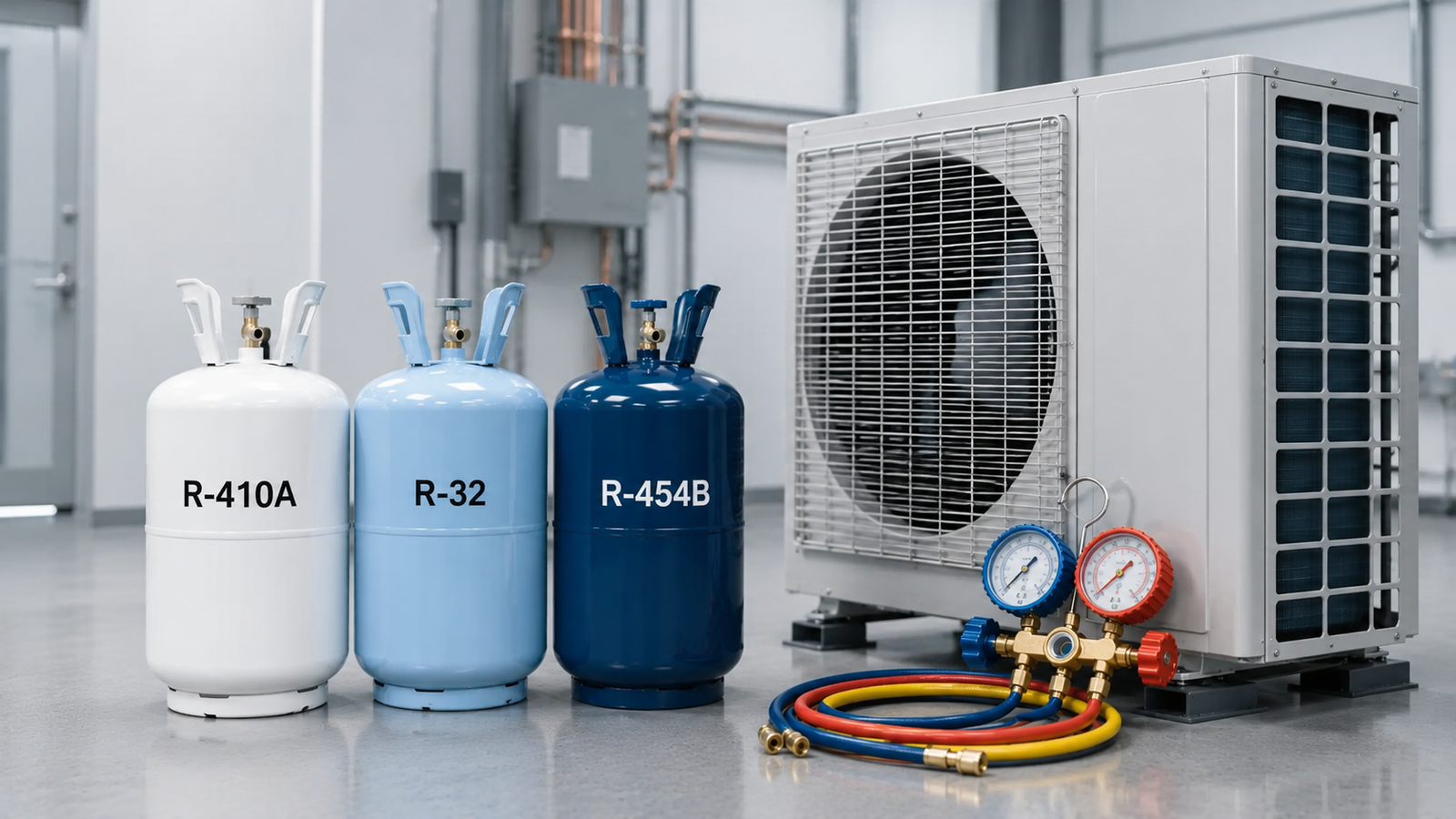
The residential and light-commercial HVAC industry is moving through one of its most significant refrigerant transitions in years. R-410A remains widely found in existing air-conditioning and heat-pump systems, while newer equipment is increasingly designed around lower-GWP refrigerants such as R-32 and R-454B.
Although these refrigerants may serve similar types of equipment, they are not interchangeable. Each has different operating characteristics, safety classifications, equipment requirements and service procedures that technicians and equipment owners should understand.
Important: Never replace one refrigerant with another unless the equipment manufacturer specifically approves the refrigerant and provides the appropriate service or retrofit procedure.
Quick Comparison
| Refrigerant | Approx. GWP | Safety Class | Typical HVAC Context |
|---|---|---|---|
| R-410A | 2,090 | A1 | Large installed base of residential and light-commercial A/C and heat pumps |
| R-32 | 675 | A2L | New residential and light-commercial air-conditioning and heat-pump equipment designed for R-32 |
| R-454B | 470 | A2L | New-generation residential and light-commercial systems designed specifically for R-454B |
R-410A: The Established HVAC Refrigerant
R-410A became one of the most common refrigerants used in residential central air-conditioning systems and heat pumps after the transition away from R-22 equipment.
It is classified as an A1 refrigerant, meaning it is considered lower toxicity and does not propagate flame under the conditions used for the ASHRAE safety classification.
Millions of existing systems were designed specifically around R-410A pressures, components, lubricants and operating characteristics. Those systems may continue to require R-410A for service during their useful operating life when permitted and appropriate.
However, R-410A has a substantially higher global warming potential than many of the refrigerants being introduced into newer equipment.
R-32: A Lower-GWP Single-Component Refrigerant
R-32 is increasingly used in residential and light-commercial air-conditioning and heat-pump equipment designed specifically for it.
Compared with R-410A, R-32 has a significantly lower global warming potential. It is also a single-component refrigerant rather than a multi-component blend, which means it does not experience composition change from temperature glide in the same way that zeotropic refrigerant blends do.
R-32 is classified as A2L, meaning it has lower toxicity but is mildly flammable. Equipment, installation practices, recovery equipment, tools and technician procedures must therefore be appropriate for A2L refrigerant service.
R-454B: Another Major R-410A Successor
R-454B is another lower-GWP refrigerant being adopted by manufacturers for new residential and light-commercial HVAC equipment.
Its GWP is lower than both R-410A and R-32, which makes it attractive for equipment designed to meet newer refrigerant requirements.
Like R-32, R-454B is classified as A2L. Unlike R-32, however, R-454B is a refrigerant blend. Technicians must therefore follow the pressure-temperature data, charging procedures and service instructions specified for R-454B equipment.
R-32 vs R-454B
Because both refrigerants are being used as lower-GWP alternatives in new HVAC equipment, buyers frequently ask whether R-32 and R-454B are essentially the same product.
They are not.
Important differences include:
- R-32 is a single-component refrigerant, while R-454B is a blend.
- R-454B has a lower GWP than R-32.
- Both are classified as A2L refrigerants.
- Equipment must be specifically designed and approved for the refrigerant being used.
- Pressure-temperature characteristics and charging procedures differ.
- Service information, controls and system charge specifications must follow the equipment manufacturer.
Can R-32 or R-454B Replace R-410A?
Not as a simple refrigerant substitution.
An existing R-410A system should not automatically be charged with R-32 or R-454B simply because the newer refrigerant has a lower GWP.
R-410A equipment was designed around R-410A operating characteristics and an A1 refrigerant classification. R-32 and R-454B are A2L refrigerants and introduce different equipment, safety and servicing requirements.
Always use the refrigerant listed on the equipment nameplate unless the manufacturer provides an approved alternative procedure.
Understanding A2L Refrigerants
One of the most important differences between R-410A and the newer R-32 and R-454B refrigerants is their safety classification.
R-32 and R-454B are classified as A2L refrigerants. A2L refrigerants have lower flammability than refrigerants classified as A3, but they still require specific handling practices.
Depending on the equipment and service procedure, technicians may need:
- A2L-compatible recovery equipment;
- appropriate leak-detection equipment;
- proper ventilation during service;
- approved tools and electrical equipment;
- correct refrigerant cylinders and labeling; and
- training on current A2L service and safety procedures.
Always follow the equipment manufacturer's instructions, refrigerant Safety Data Sheet and applicable codes before servicing an A2L system.
Why the HVAC Industry Is Moving Away From Higher-GWP Refrigerants
The U.S. refrigerant market is changing as federal regulations reduce the use of higher-GWP HFC refrigerants in new equipment.
EPA's Technology Transitions program establishes GWP limits for several types of new refrigeration and air-conditioning equipment. For many residential and light-commercial air-conditioning applications, newer refrigerants must fall below limits that R-410A exceeds.
R-32 and R-454B fall below the 700-GWP threshold applicable to many of these new HVAC applications, which is one reason manufacturers have redesigned equipment around these refrigerants.
What Happens to Existing R-410A Systems?
The introduction of R-32 and R-454B does not mean every existing R-410A system suddenly needs to be replaced.
Existing equipment should generally continue to be serviced according to its manufacturer's specifications and applicable refrigerant regulations.
When evaluating an older system, owners and technicians may consider:
- equipment age and condition;
- history of refrigerant leaks;
- repair cost;
- energy efficiency;
- availability of replacement components;
- refrigerant availability; and
- cost of repair compared with replacement.
Always Check the Equipment Nameplate
The equipment nameplate is one of the most important references when purchasing refrigerant.
It normally identifies the refrigerant for which the equipment was designed and may also provide the factory charge or other system information.
A cylinder should never be selected only because two refrigerants are used in similar categories of air-conditioning equipment.
R-410A, R-32 and R-454B each have their own operating and safety requirements.
Purchasing Refrigerant for Service
Before purchasing refrigerant, technicians and businesses should confirm:
- The exact refrigerant listed for the equipment.
- The required cylinder size.
- The equipment manufacturer's service instructions.
- The refrigerant safety classification.
- Whether A2L-compatible tools and procedures are required.
- Applicable purchaser-certification requirements.
- Shipping, storage and handling requirements.
Frequently Asked Questions
Is R-32 the same as R-410A?
No. R-32 is a separate refrigerant with different operating and safety characteristics. Although R-32 is one of the components used in R-410A, pure R-32 should not be treated as R-410A.
Is R-454B a direct replacement for R-410A?
No. R-454B is intended for equipment designed and approved for R-454B. It should not be added to an R-410A system as a simple replacement refrigerant.
Which has the lowest GWP?
Of the three refrigerants compared here, R-454B has the lowest GWP, followed by R-32 and then R-410A.
Are R-32 and R-454B flammable?
Both are classified as A2L refrigerants, commonly described as mildly flammable. Appropriate equipment, service procedures and safety precautions are required.
Can I mix R-410A with R-32 or R-454B?
No. Refrigerants should not be mixed. Recover the refrigerant according to applicable procedures and use only the refrigerant specified or approved for the system.
Will R-410A disappear immediately?
No. A substantial installed base of R-410A equipment remains in service. Refrigerant transitions primarily affect which refrigerants may be used in certain categories of new equipment and how manufacturers design future systems.
Choosing the Correct Refrigerant
There is no universal choice between R-410A, R-32 and R-454B. The correct refrigerant is determined first by the equipment itself.
For existing systems, technicians should follow the equipment nameplate and manufacturer service documentation. For new equipment, R-32 and R-454B are increasingly common lower-GWP options designed into modern HVAC platforms.
Refriggaz supplies refrigerants for professional HVAC, automotive A/C and commercial refrigeration applications. Review product specifications carefully and confirm system compatibility before ordering.
Educational notice: This article provides general information and is not a substitute for manufacturer service instructions, Safety Data Sheets, applicable codes, EPA requirements or qualified professional guidance.
 R-22 Refrigerant
 R-1234yf Refrigerant